
Professional drone thermal imaging uses specialized infrared sensors to identify and document temperature differences across roofs, buildings, electrical systems, solar installations, and industrial assets. These thermal patterns can help qualified professionals identify areas that may warrant further investigation—without requiring personnel to physically access every portion of the asset. Our commercial thermal imaging services combine high-resolution infrared data with visual imagery to provide clients with a clearer understanding of conditions across their properties and facilities.
Commercial roofing is one of the most valuable applications for drone-based thermal imaging.
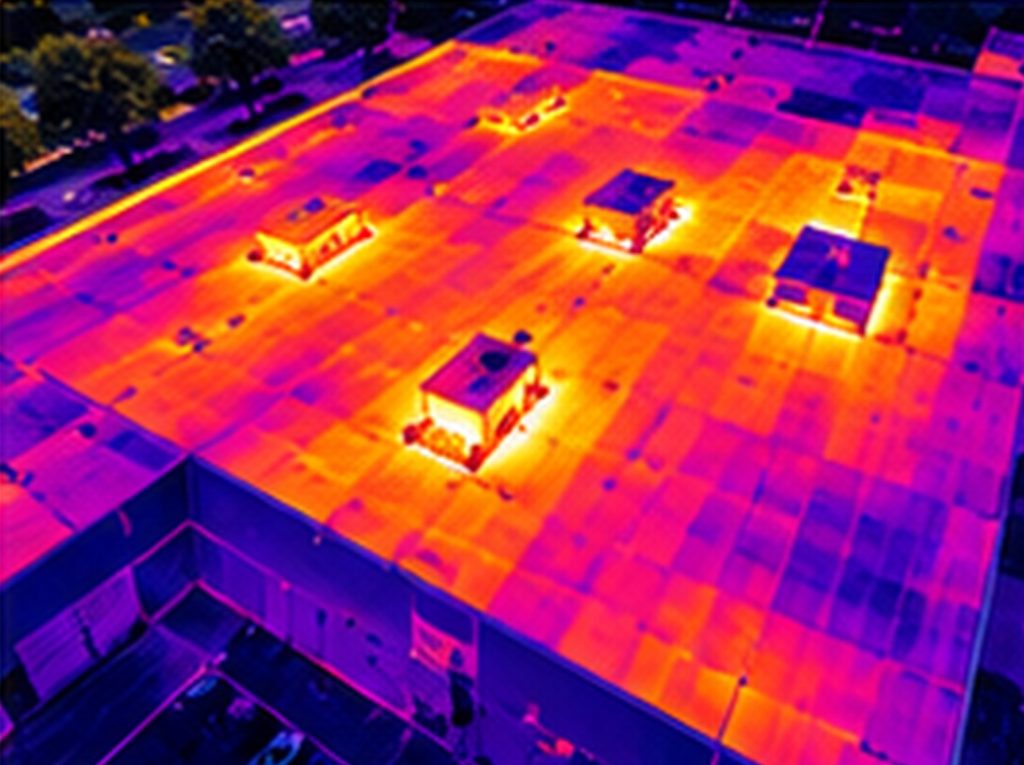
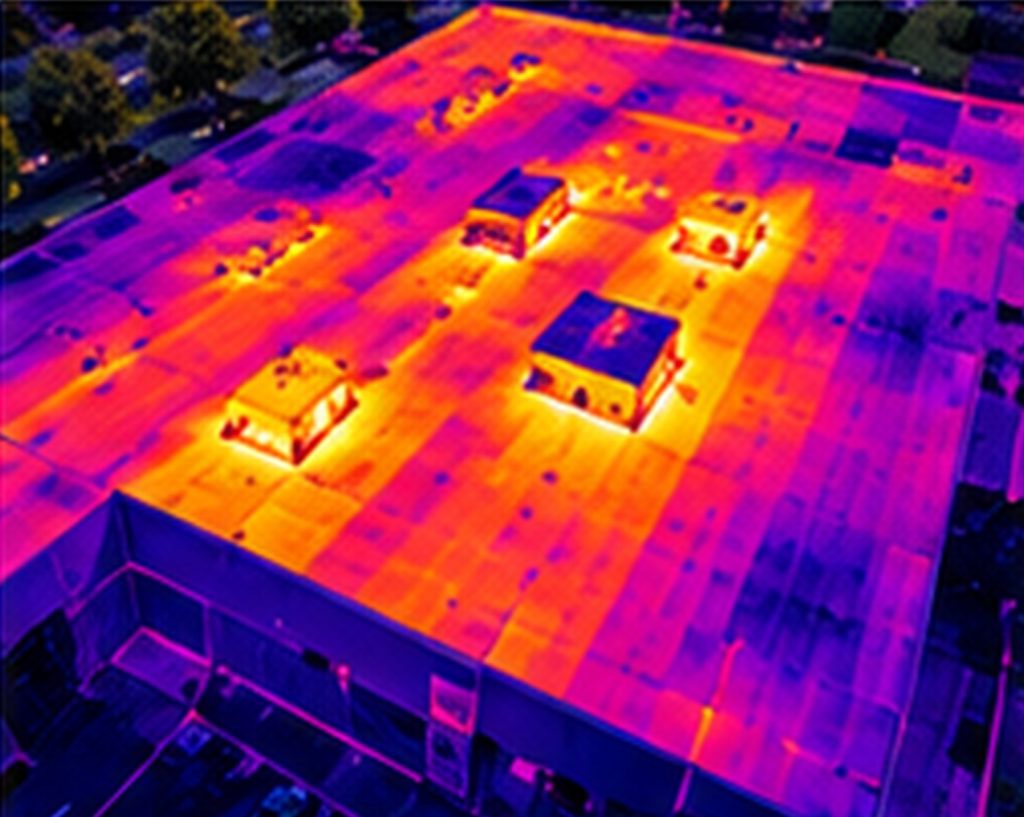
Moisture trapped within certain roofing systems can create thermal patterns that differ from surrounding dry areas under appropriate environmental and operating conditions.
A properly planned thermal roof inspection can help identify areas exhibiting thermal anomalies for further investigation by qualified roofing professionals.
Applications may include:
Drone technology allows large roof areas to be evaluated efficiently while reducing the need for personnel to physically traverse the entire roof during the initial data-collection process.
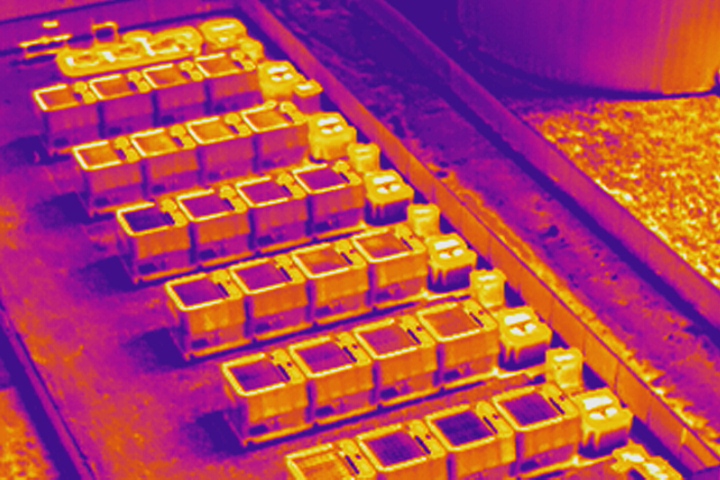
Electrical components frequently generate heat when operating.
Abnormal temperature differences between similar components may provide an indication that further investigation is appropriate.
Thermal drone inspections may be useful for documenting:
Drone-based thermal imaging can be particularly valuable when equipment is elevated, distributed across a large facility, or difficult to access safely.
Thermal imaging can also provide valuable information about exterior building conditions.
Depending on environmental conditions and building construction, infrared imagery may reveal temperature patterns associated with:
Thermal imagery can be paired with high-resolution visual photographs to help facility managers, engineers, consultants, and contractors identify the exact location of areas of interest.
Facility managers are responsible for protecting valuable buildings and infrastructure while controlling maintenance and operating costs.
Recurring thermal inspections can become part of a broader preventive and predictive maintenance strategy.
Thermal data can help facility teams establish baseline conditions and monitor changes over time.
Applications may include:
Rather than waiting for a visible problem to develop, thermal imaging provides another source of information that can help maintenance professionals determine where closer investigation may be appropriate.
Large solar installations can contain hundreds or thousands of individual modules.
Thermal imaging provides an efficient method for documenting temperature differences across an entire solar array.
Depending on operating and environmental conditions, thermal anomalies may help identify modules or areas that warrant additional testing or evaluation.
Drone thermal inspections can assist with:
High-resolution visual imagery can also be collected to provide additional documentation of the system.
Professional thermal inspections can provide more than a simple infrared photograph.
When appropriate radiometric sensors are used, temperature information is recorded within the thermal imagery, allowing trained professionals to analyze temperature differences across the inspected area.
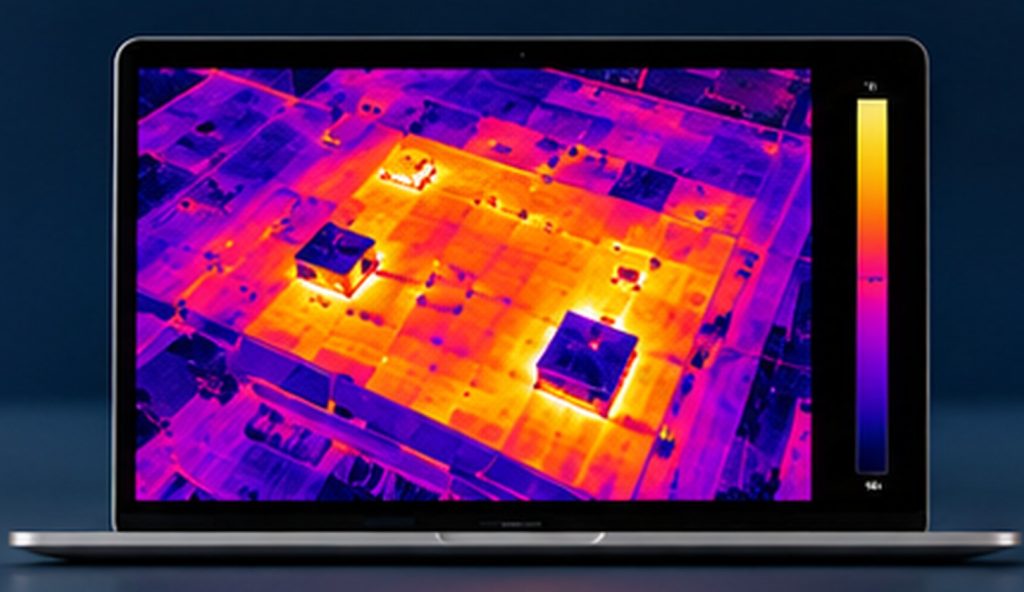
Depending on project requirements, deliverables may include:
Deliverables are developed around the client’s intended use of the information.
Environmental conditions can significantly affect thermal results. Thermal missions should be planned around both the asset being inspected and the conditions required to collect useful data.
A thermal camera measures infrared energy and displays temperature patterns.
It does not see through walls or roofs, and a thermal anomaly does not automatically prove the presence of moisture, an electrical defect, missing insulation, or another specific condition.
Thermal imaging is most valuable when used as an investigative tool.
Areas displaying unusual thermal patterns can be documented and provided to qualified roofing contractors, engineers, electricians, building-envelope consultants, facility professionals, or other specialists for further evaluation and verification.
Many commercial and industrial assets are difficult, expensive, or potentially hazardous to access.
Drone-based thermal imaging can provide an efficient initial method of evaluating large areas while reducing the amount of time personnel must spend on roofs, elevated structures, or around industrial equipment.
When an area of concern is identified, maintenance or inspection personnel can then focus their attention on a specific location rather than manually inspecting the entire asset.
A single thermal inspection provides information about conditions at a specific point in time.
Recurring inspections can provide even greater value.
By documenting assets under similar conditions over time, facility and maintenance teams can compare current thermal patterns with previous inspections and identify meaningful changes.
Annual or scheduled thermal programs may be appropriate for:
The result is an organized thermal history of the asset rather than a collection of unrelated inspections.
Every thermal project should begin with the asset and the problem you’re trying to evaluate.
What needs to be inspected? What type of roof, building, or equipment is involved? How will the thermal data be used? Who will evaluate the findings? What deliverables are required?
Once we understand those requirements, we can develop the appropriate thermal data-collection plan.
Contact us to discuss your property, facility, or asset and determine how professional drone thermal imaging can support your inspection and maintenance program.